The Authentication System Is Broken — And Nobody’s Fixing It
The sports card hobby runs on trust. When you pay thousands for an authenticated autograph, you’re trusting two things: that the authenticator examined the item, and that their database can’t be faked.
Both of those assumptions are wrong.
Here’s how the authentication system fails collectors—twice.
Problem #1: Real Cert Numbers on Fake Autographs
One of the biggest authentication scams in the industry involves eBay sellers moving millions in fake autographs using real certification numbers from companies like Beckett, PSA, Fanatics, and JSA. Read the full investigation here.
Here’s how the scam works:
- Find a real cert number from a company’s database (there are millions)
- Print a fake label with that real number
- Put it on a fake autograph
- List it on eBay
When buyers verify the cert number on the company’s website, it shows up as authentic. Because the number is real—it’s just on the wrong item.
Why This Works: Most authentication databases don’t store photos of the items. So when you enter a cert number, you see “Valid” and “Tom Brady autograph”—but not a photo of what was actually authenticated.
Scammers can slap the same real cert number on 50 different fake Bradys, and every single one verifies as “authentic.”
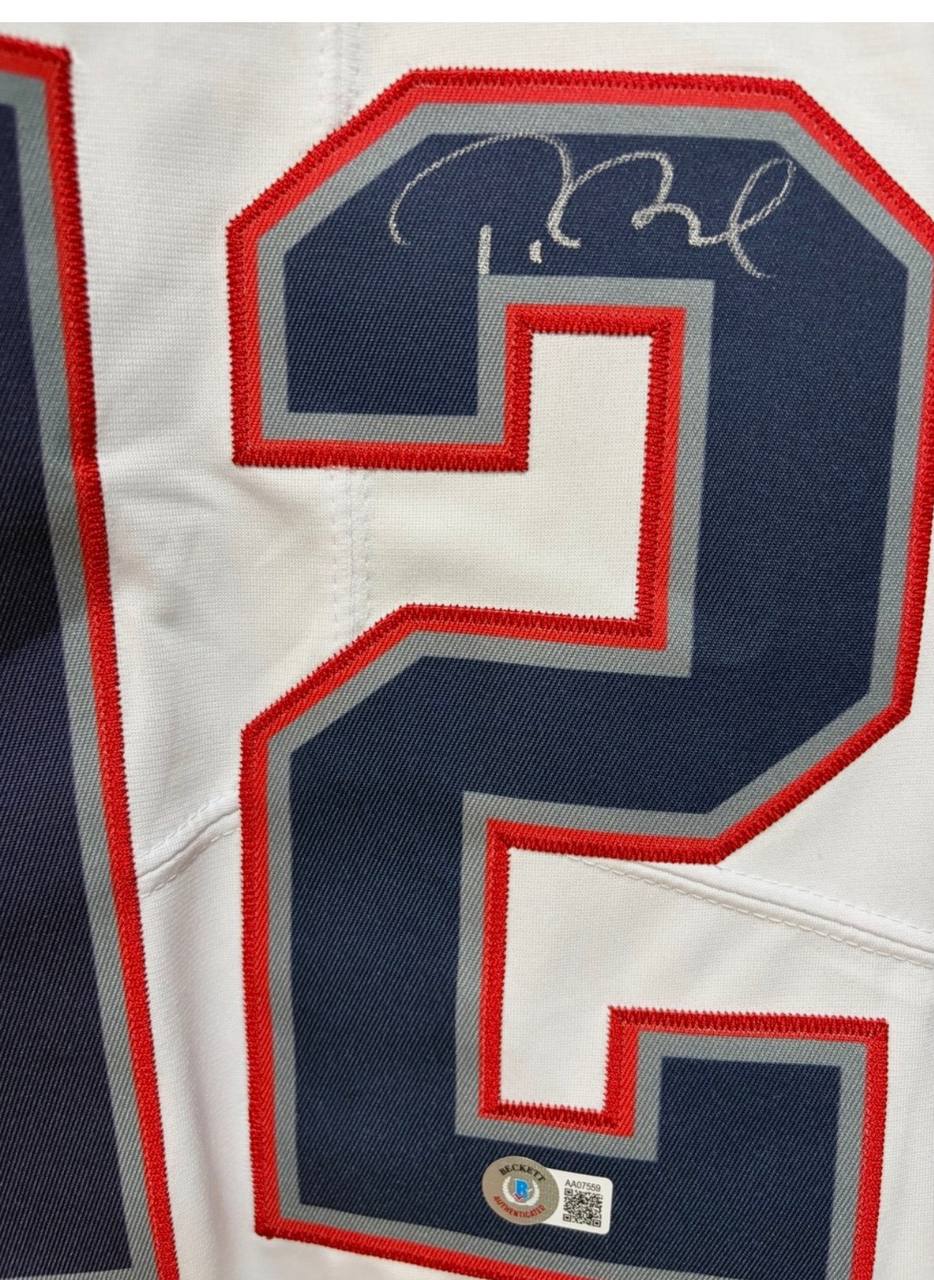
The Scale: A single eBay seller documented by hobby investigator Roman Pioner had over 10,000 fake certifications sold, with estimated fraud exceeding $1 million+.
Problem #2: Even When They DO Examine Items, They Can’t Agree
Okay, so database exploits are bad. But at least when authenticators actually examine an item in person, they get it right… right?
Wrong.
In 2009, PSA authenticated a Charles Lindbergh autograph. Then they rejected it. Then they authenticated it again. Same signature. Three different answers.
Here’s what happened.
2008: The Fake Enters the Market
Brian Gray, former CEO of Leaf Trading Cards, sold Upper Deck a Charles Lindbergh signature for their “Hair Cut Signatures” product—premium trading card redemptions featuring historical autographs and locks of hair.
PSA authenticated it. Upper Deck put it into production.
CVS manager Robert Sterpka spent $1,500 buying a case of Upper Deck cards, hoping to pull a rare redemption. Lucky for Sterpka, he found it: a Charles Lindbergh redemption.
Upper Deck sent him a card with the cut signature, a strand of hair, and PSA certification. Per the advice of Beckett Select Auctions’, Sterpka got dual authentication from JSA. JSA approved it too.
He listed it on eBay with a $10,000 starting price.
2009: An Expert Spots the Forgery
Dan Clemons—an autograph expert who’d worked with Lindbergh’s daughter Reeve for years studying her father’s handwriting—saw the eBay listing and recognized it immediately as a fake.
The tells: uncrossed “a” (Lindbergh always crossed his), open-looped “g” (Lindbergh’s were closed), flaked ink on the “C” (sign of tracing), inconsistent pen thickness. Clemons called it “one of the worst forgeries” he’d ever seen.
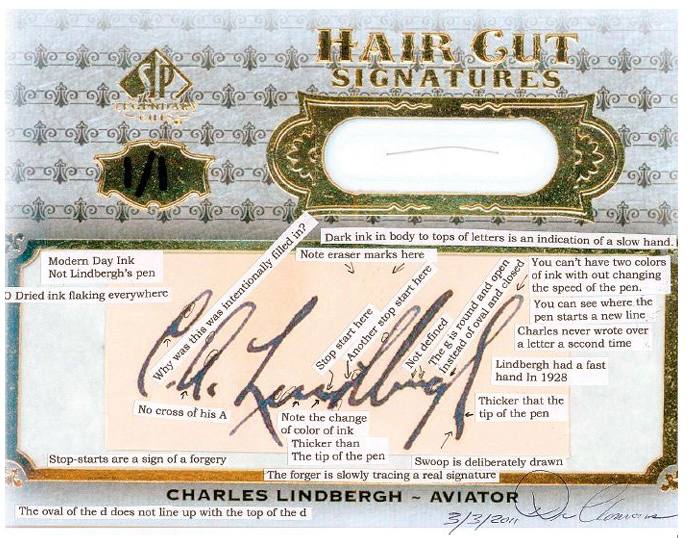
He contacted eBay’s fraud division. They removed the listing. Sterpka tried to relist. eBay removed it again. Clemons called Sterpka directly. Within ten minutes, Sterpka was convinced it was fake.
PSA Changes Its Mind… Twice
Sterpka sent the card to RR Auction for another opinion. They forwarded it to PSA.
PSA—the same company that authenticated it a year earlier—rejected it:
“After a thorough examination of your item, we regret to report that your item did not pass PSA/DNA authentication.”
Sterpka hired attorney Douglas Jaffe and filed suit against PSA’s parent company (Collectors Universe) and Upper Deck for fraud and negligent misrepresentation.
During depositions, PSA flip-flopped again. They claimed the rejection letter was “inadvertently issued” and declared the Lindbergh authentic once more.
PSA offered $6,000 to settle. Upper Deck refused to pay anything.
What the Court Testimony Revealed
No one at PSA could identify who actually looked at the Lindbergh autograph—not the first time (when they approved it), not the second time (when they rejected it), not the third time (when they approved it again).
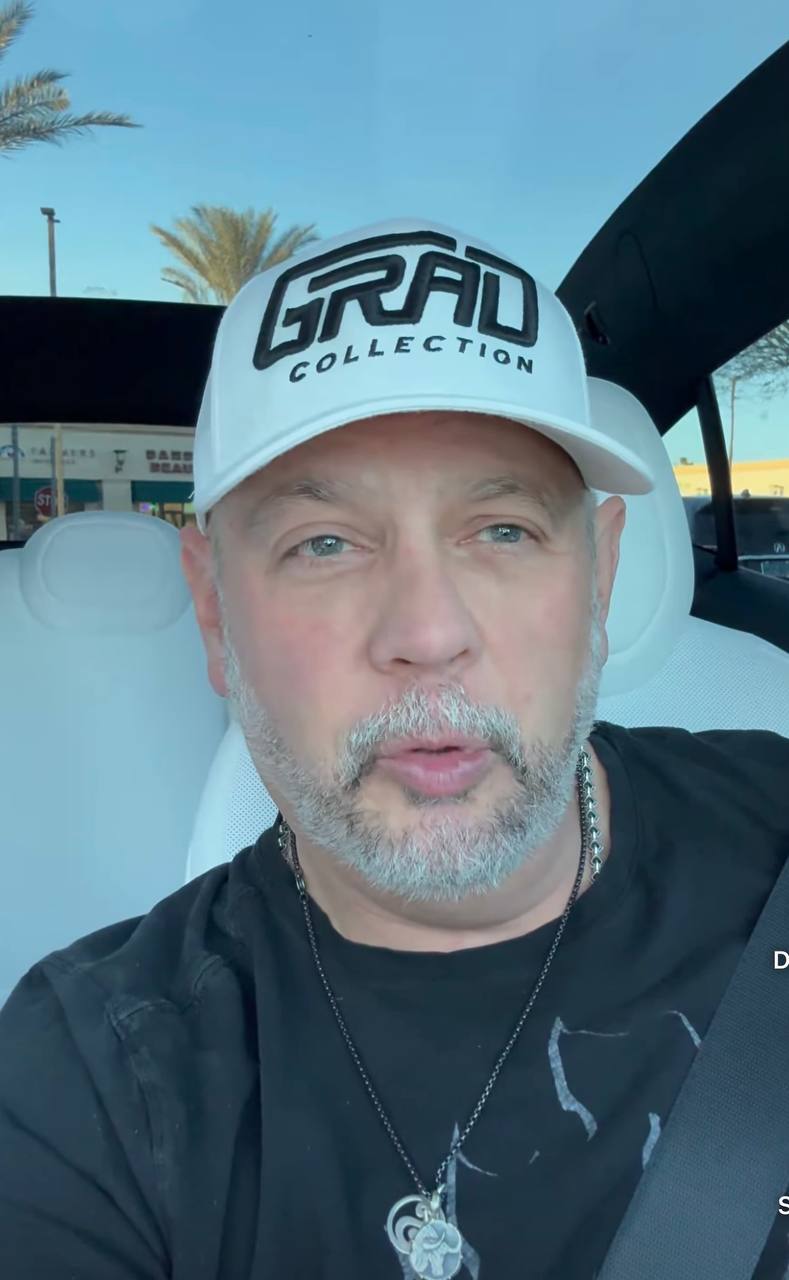
Steve Grad signed the rejection letter. But in his deposition, he testified he had “no personal involvement beyond signing the rejection letter.” When pressed, he said: “A mistake was made.” Passive voice. No accountability.
Grad testified he’d “deferred to Mr. Reznikoff’s expert opinion.” John Reznikoff is a consultant for both PSA and JSA who also sells autographs through his own company, University Archives.
Reznikoff testified he had no knowledge of having examined the signature prior to the lawsuit.
So: Grad signed the letter but didn’t examine it. Grad said he deferred to Reznikoff. Reznikoff doesn’t remember examining it. Who actually looked at the Lindbergh autograph? Nobody knows.
Court records showed Grad had approved “scores of forgeries” over the years, costing collectors hundreds of thousands of dollars.
Testimony revealed Grad had no college degree (he briefly attended Columbia but never graduated), no formal training, and learned authentication from Bill Mastro—who later pleaded guilty to mail fraud in 2013, admitted to trimming the T206 Honus Wagner card, and served 20 months in federal prison.
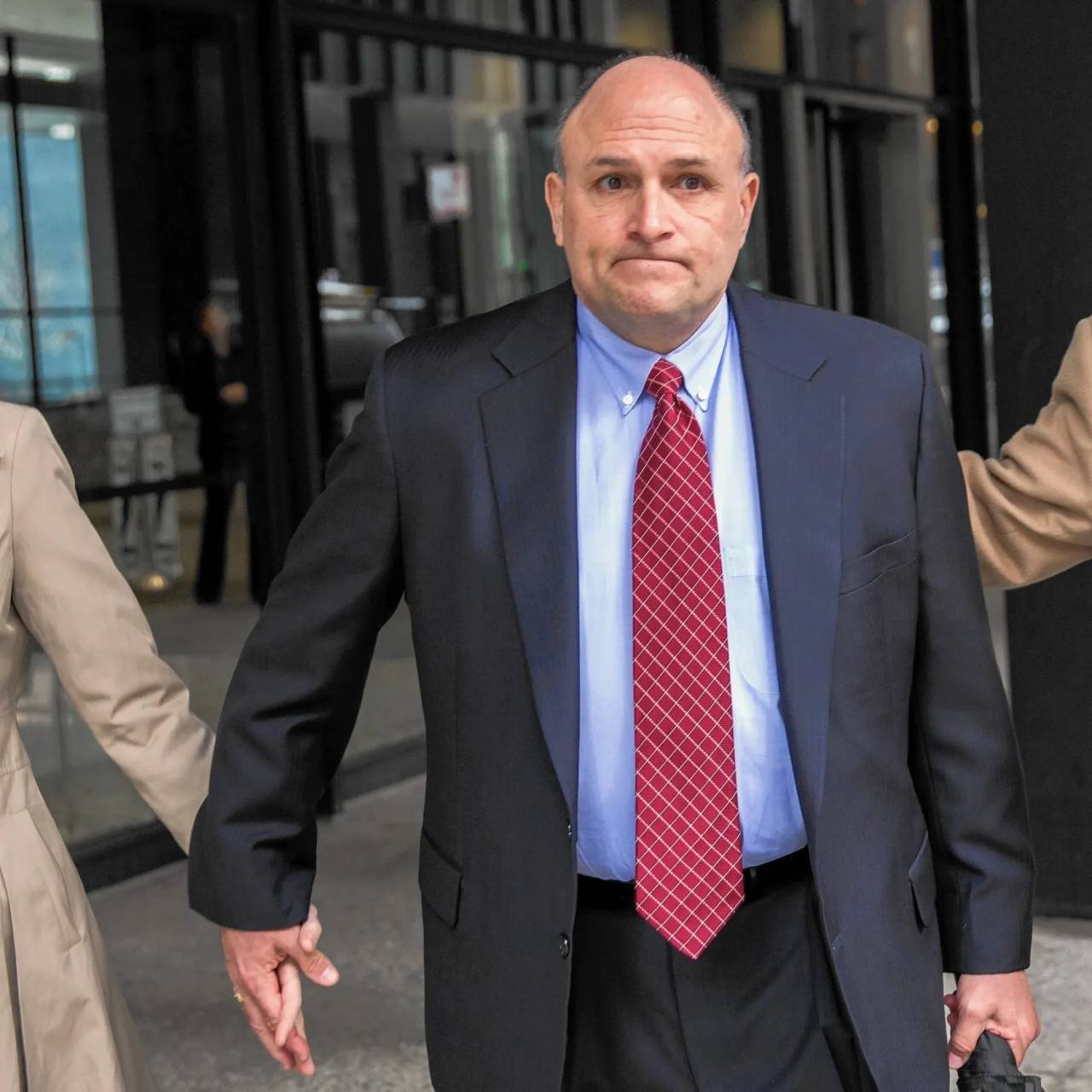
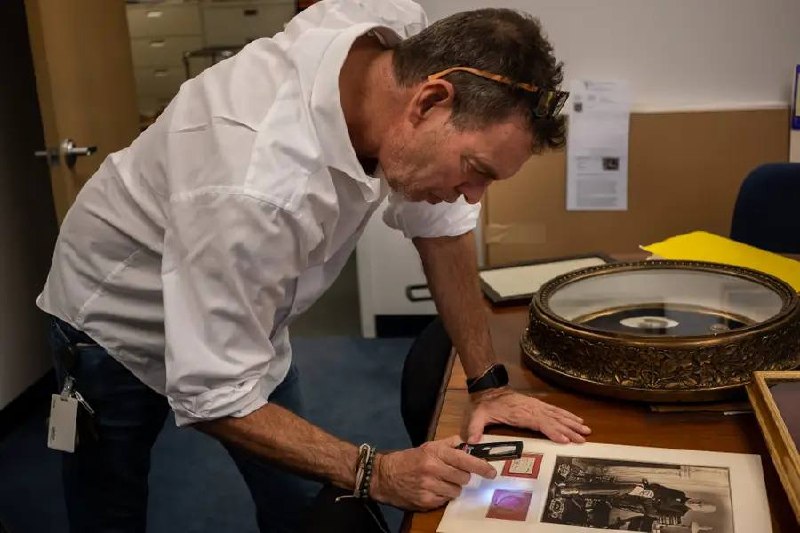
Reznikoff authenticated $5 million to $7 million in JFK/Marilyn Monroe documents in the 1990s that turned out to be complete fakes. One had Kennedy’s ZIP code on an envelope—two years before ZIP codes existed.
On Pawn Stars, Reznikoff authenticated a Godfather screenplay signed by “Al,” declaring it bore Al Pacino’s signature. Producer Al Ruddy later confirmed it was his own signature—not Pacino’s.
November 2011: Despite expert testimony that the signature was forged and PSA’s contradictory letters, the judge dismissed Sterpka’s lawsuit.
The ruling: PSA and Upper Deck ultimately claimed the signature was genuine, so they couldn’t have intentionally committed fraud. Sterpka lost. PSA offered $6,000. Upper Deck paid nothing. Sterpka kept the card. It still carries dual PSA and JSA authentication.
Two Ways the System Fails You
Failure #1: The Database Is Exploitable — Scammers use real certification numbers on fake items because grading companies don’t store photos. As long as the cert number is real, the fake autograph will verify as “authentic.” Scale: $1 million+ in fraud from a single eBay seller, with PSA, Beckett, Fanatics, and JSA all exploited.
Failure #2: Authenticators Are Wildly Inconsistent — Even when items ARE examined, authenticators can’t agree. PSA authenticated the Lindbergh, rejected it, then authenticated it again. Nobody could say who actually looked at it. The guy who signed the rejection letter never examined it. The consultant he deferred to doesn’t remember examining it.
There’s no licensing for authenticators. No required education. No background checks. No consequences for approving fakes. You can learn from a convicted fraudster, approve hundreds of thousands of dollars in forgeries, and still get partnership offers from major authentication companies. And even if you trust the authenticator, scammers can exploit the database with real cert numbers on fake items.
Collectors are just supposed to trust this system.
Written by
Grayson Bryce Thompson
Grayson writes about the sports card hobby — the money, the frauds, and the stories the industry doesn't want told. He's been collecting since the junk wax era and still has the boxes to prove it.