The Day Topps Dumped a Million Mickey Mantles Into the Ocean
Imagine standing on a garbage scow in 1960, watching pallets of baseball cards slide into the Atlantic. Hundreds of cases. Thousands of packs. Among them, roughly 20,000 Mickey Mantle rookie cards — cards that would one day sell for millions. Sy Berger watched it all disappear beneath the waves.
This is the story of the most expensive mistake in sports card history.
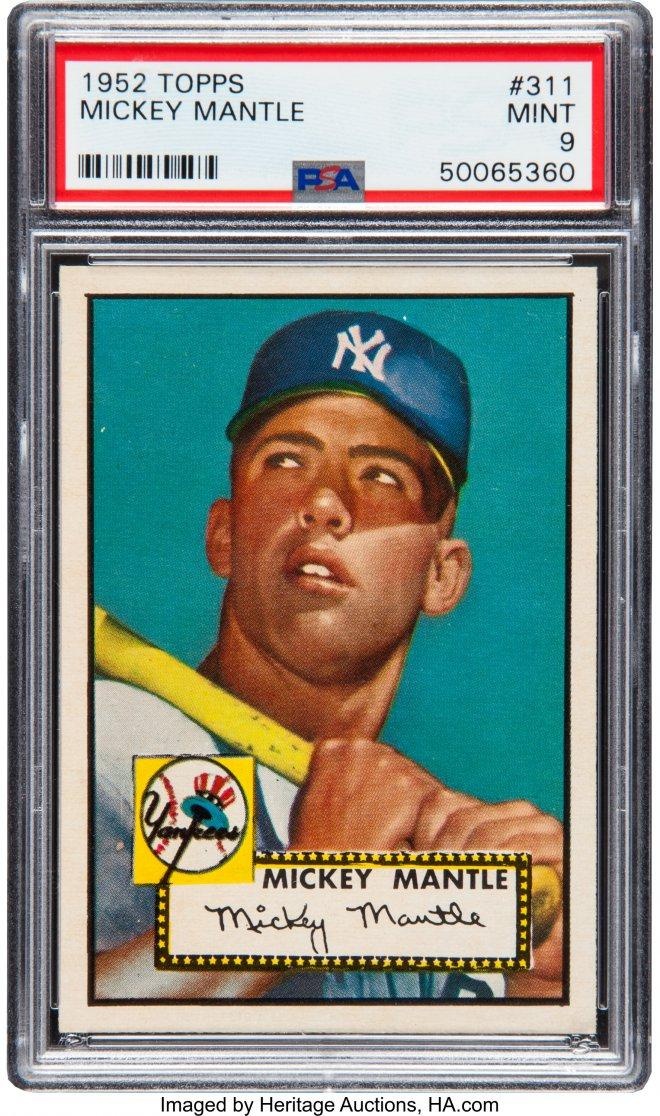
The 1952 Topps Mickey Mantle #311 — the Holy Grail of baseball cards. This PSA MINT 9 example sold for $12.6 million. (Image: Heritage Auctions)
In the summer of 1952, Topps released its sixth and final series of baseball cards — numbers 311 through 407. The set was revolutionary. Larger format. Vibrant colors. Statistics and biographies on the back. At his kitchen table in Brooklyn, Sy Berger had designed what would become the blueprint for every modern baseball card.
But there was a problem.
The cards hit stores late in the season. By the time kids could buy them, baseball was over and football had started. The high numbers sat on shelves. Distributors sent cases back. Sales were disappointing.
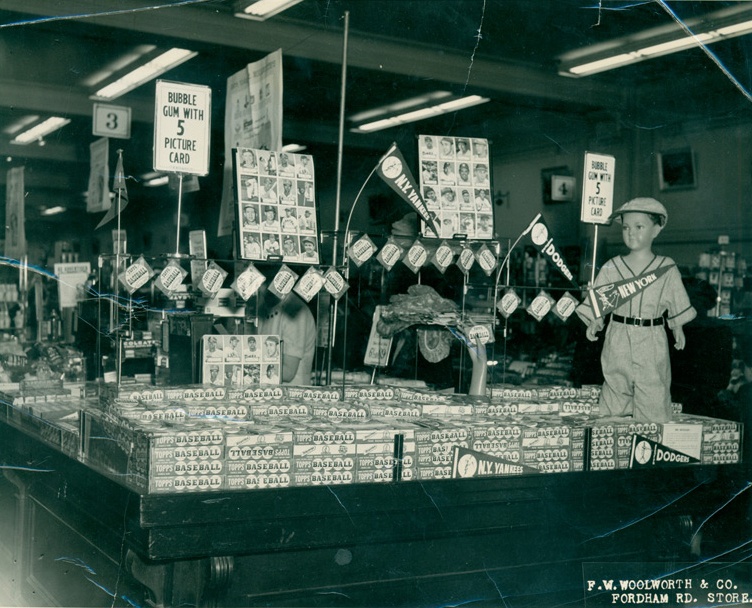
1952 Topps baseball cards on display at a F.W. Woolworth store. (Photo: History Colorado)
Mickey Mantle’s card was #311 — the first card in that final series. He’d just finished his rookie season with the Yankees, taking over center field after Joe DiMaggio retired. Topps even double-printed his card, expecting huge demand.
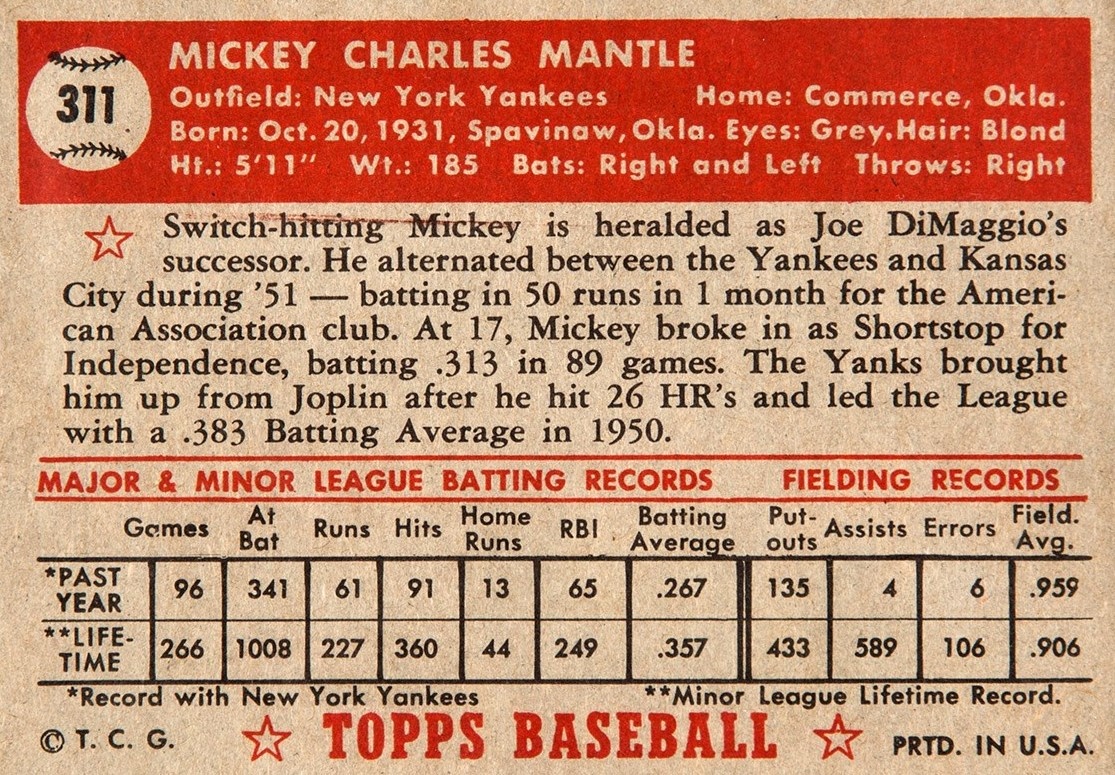
The back of the 1952 Topps Mickey Mantle #311 — full stats and bio. (Photo: History Colorado)
Nobody cared.
Years passed. The unsold cases sat in Topps’ Brooklyn warehouse, taking up space. New sets came and went. The 1952 high numbers gathered dust.
By 1959, Berger decided to do something about it. The man who’d created the modern baseball card now became a traveling salesman, hauling cases to carnivals and toy shops.
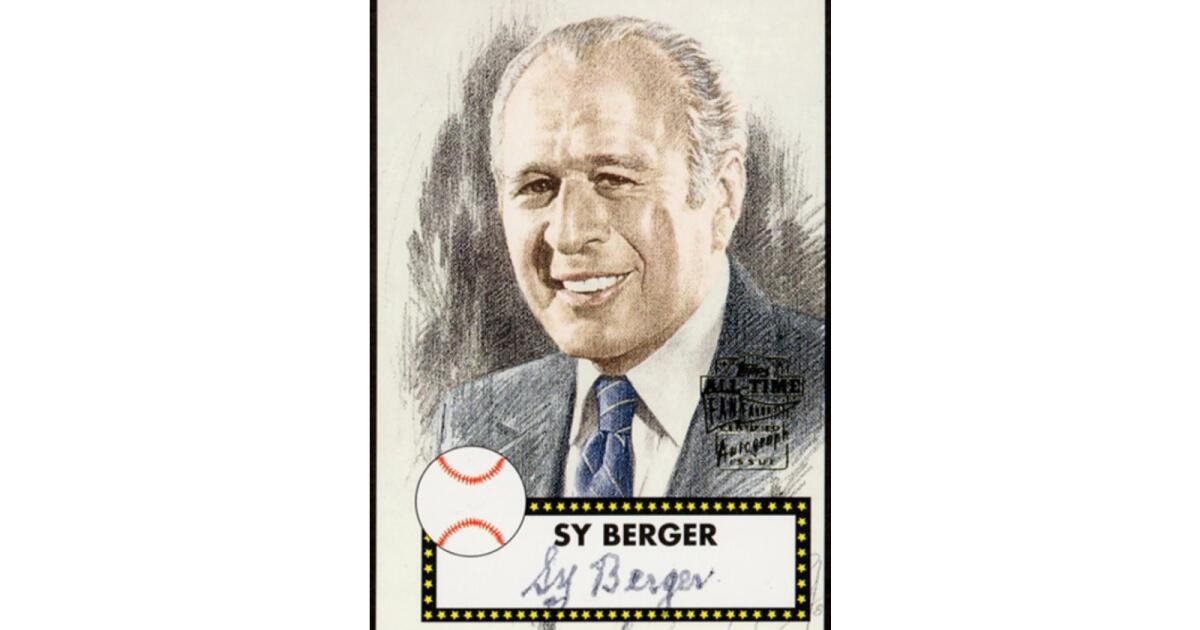
Sy Berger — the father of the modern baseball card — designed the 1952 Topps set and later ordered the ocean dump. (Photo: Los Angeles Times)
“I went around to carnivals and offered them for a penny a piece,” Berger later recalled. “It got so bad I offered them at 10 for a penny. They would say, ‘We don’t want them.’”
Think about that. The future Holy Grail of baseball cards — offered at 10 for a penny. And people said no.
Seven-year-old baseball cards were dead merchandise. Kids wanted the current year. Collectors didn’t exist yet, not in any meaningful way. Cardboard photos of ballplayers were just… trash.
In 1960, Topps made a decision. They needed the warehouse space. The old cards had to go.
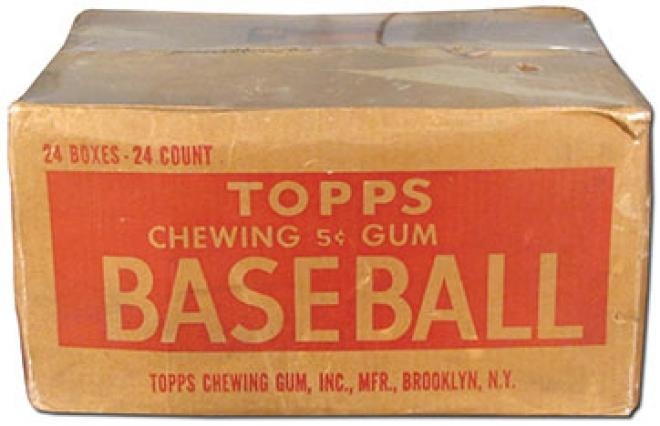
An original 1952 Topps case — 24 boxes, 24 count. Hundreds of cases just like this were loaded onto a garbage barge and dumped into the Atlantic. (Photo: Forbes/Heritage Auctions)
Berger found a friend with a garbage scow. They loaded three garbage trucks worth of 1952 Topps high numbers onto the barge — close to 500 cases, according to some accounts. A tugboat pulled the scow a few miles off the New Jersey coast.
And then they dumped them into the Atlantic Ocean.
Berger claimed he was there, standing on that barge, watching case after case of his creation slide into the water. Packs floating for a moment before sinking. Tens of thousands of cards — Mantles, Jackie Robinsons, Willie Mays — gone forever.
He called it “a routine spring cleanup.” Just making room for new inventory. No different than throwing out old newspapers.
At the time, nobody thought twice about it. Why would they?
The cards that didn’t end up in the ocean were in the hands of kids who’d bought them eight years earlier. Kids who stuck them in bicycle spokes. Folded them. Tossed them. Lost them.
High-grade survivors are extraordinarily rare.
Today, a PSA 9 1952 Topps Mickey Mantle — one of the most iconic cards in the hobby — sold for $12.6 million in 2022. Even commons from the high-number series command hundreds of dollars in any condition.
The irony is almost painful. Berger couldn’t give those cards away for a penny each. He literally threw them into the ocean. And by doing so, he accidentally created the scarcity that would make the few survivors priceless.
When collectors began telling the story in the 1980s, Berger embraced it. He’d repeat the tale at card shows, a bit of humor in his voice. He understood the absurdity. The man who invented the modern baseball card had also destroyed more of them than anyone in history.
Some details have been disputed over the years. Was it really 500 cases? Was it the Atlantic or the Hudson? Did it happen in 1960 or earlier?
But the core truth remains: Topps deliberately destroyed a massive supply of 1952 high numbers because nobody wanted them. Storage space was more valuable than the cards themselves.
Somewhere off the coast of New Jersey, hundreds of feet down, lie the remains of what might be the most valuable sports memorabilia never recovered. Dissolved cardboard. Faded ink. Twenty thousand Mickey Mantles, give or take, resting on the ocean floor.
Every time a 1952 Topps high number sells at auction, collectors can’t help but wonder: What if Berger had kept just one more case? What if someone had wanted those cards for a penny?
But that’s the thing about history. You can’t see the future from inside it. To Sy Berger in 1960, those were just old baseball cards taking up space.
To us, they’re treasure.