Whatnot Called a Casino. Fanatics Live Gets a Pass.
Whatnot just got hit with arbitration demands claiming it operates an illegal gambling operation. The platform says it’s nonsense. The hobby says it’s nothing new. But here’s what very few people are talking about: Fanatics Live does the exact same thing.

St. Louis attorney Paul Lesko filed 15 arbitration demands against Whatnot on behalf of 30 clients, claiming the platform’s randomized box breaks and repack breaks violate California’s ban on illegal lotteries.
The claims allege Whatnot isn’t a marketplace — it’s an unregulated online casino exploiting collectors through compulsive spending mechanics.
“Whatnot represents that it operates a ‘marketplace’ where live-shopping helps connect ‘buyers’ and ‘sellers.’ This is a false front,” the arbitration demands state.
“Functionally, Whatnot operates an unregulated online casino where it exploits its customer base by encouraging compulsive spending and in the process generates billions in revenue without providing the safeguards required of regulated gambling operations.”
Lesko’s clients are demanding Whatnot’s randomized breaks be deemed unlawful gambling, along with restitution of all money spent, compensatory and punitive damages, and an order requiring addiction warnings, self-exclusion tools, and spending limits.
According to The Athletic, the complaints cite specific customer harm: “They went to this platform to initially just buy cards and quickly found out that that’s not what it is. It’s gambling. The platform makes its money off of gambling. And our clients had quickly gotten addicted to it. … It’s the dopamine hit. At some point, they even stop caring about the cards.”
Whatnot sellers generated $8 billion in sales last year — double the 2024 figure. Sports cards remain the platform’s top category, with more than 6.4 million cards purchased monthly. The company is routinely ranked as one of the best startup employers in tech.
Whatnot issued a statement to cllct rejecting the allegations entirely:
“We absolutely reject the characterization in this complaint. Gambling isn’t allowed on Whatnot, and we strictly enforce this policy. Card breaks are a long-standing format in collecting — at card shops, conventions, and in communities that have thrived for generations.”
— WHATNOT
The company emphasized that sellers who “break” represent only 4% of its platform, shows happen live and on camera, and sellers face consequences for rule violations.
“We’ve set the standard for how these formats work online, and we’re committed to maintaining it,” the statement reads.
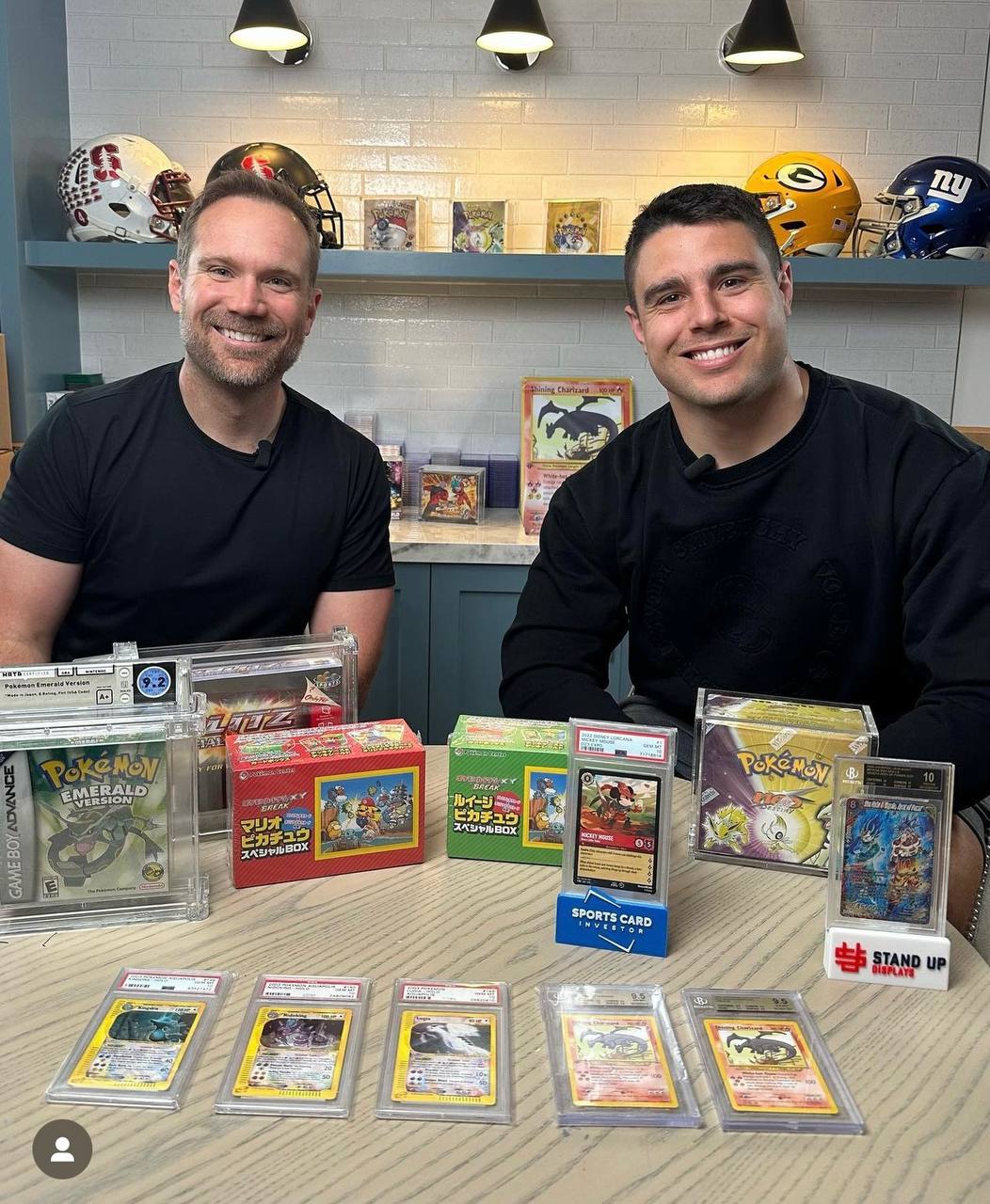
Whatnot has banned sellers in the past for scams.
Former NFL linebacker Blake Martinez was kicked off the platform for running fraudulent schemes with Pokémon packs, demonstrating the company does enforce consequences when violations are detected.
Many in the collecting community are calling this a “nothing burger.”
Box breaks have existed for decades — at card shops, conventions, and online forums long before Whatnot arrived. The randomized element (team/player assignments via wheel spins or card draws) has always been part of the format.
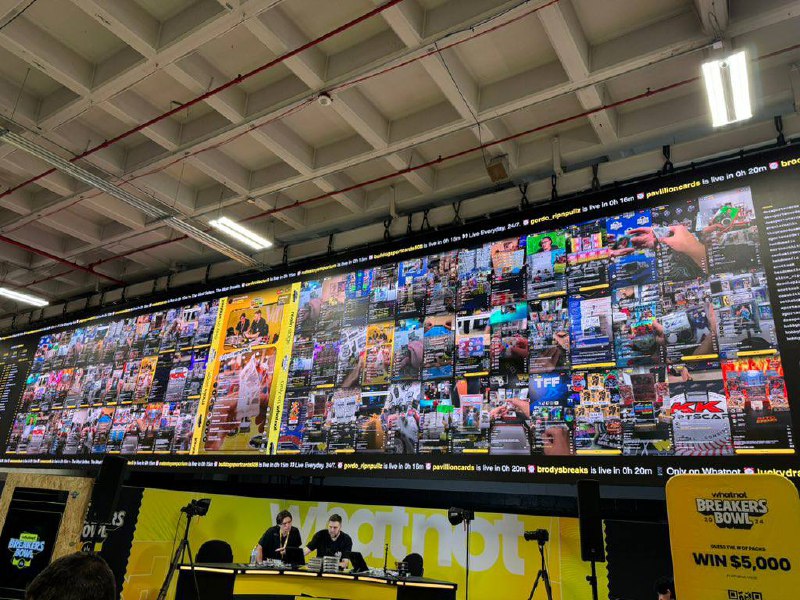
The difference now? Scale. Whatnot brought breaks to millions of users with slick mobile interfaces, celebrity hosts, and dopamine-engineered notification systems. What was once a card shop staple is now a billion-dollar livestream economy.
But if Whatnot’s breaks constitute gambling, the question becomes: where’s the line? Upper Deck president Jason Masherah told The Athletic last year that repacks specifically cross it: “The way the repacks are being done right now is purely gambling, and it’s going to be an issue for our industry. You can’t go out, sell a product, guarantee a return, put the values of every card out there. … It is 100 percent pure gambling the way it’s being done right now.”
Worth noting: Upper Deck produces some of the hobby’s most expensive products — boxes routinely priced at $500+ with randomized hit configurations. If repacks are gambling, what exactly are $600 boxes with “guaranteed” autographs and manufactured scarcity?
Here’s what’s missing from this conversation: Fanatics Live operates the exact same way.
Randomized breaks with wheel spins? Check. Repack mystery boxes? Check. Live dopamine-hit mechanics designed to keep users refreshing and bidding? Check. Multi-billion-dollar platform scale? Check.
If Lesko’s claims hold water against Whatnot, they hold water against Fanatics Live. The mechanics are identical. The only difference is the logo.
Yet Fanatics Live — backed by a $31 billion valuation and partnerships with every major sports league — has faced no legal action. Fanatics owns Topps, the very company Lesko sued in 2016 over trading card mechanics. That case was dismissed a few months after filing.
So if Lesko’s lawsuit against Topps went nowhere, why would this Whatnot case be any different? The answer is simple: Whatnot’s an easier target. Criticizing Fanatics means going after the industry’s most powerful player — the company with exclusive licenses, league partnerships, and a $31 billion war chest.
The web of relationships runs deeper than platform mechanics. Leaked Fanatics documents revealed that Backyard Breaks — one of Whatnot’s top sellers — may have ownership stake in the platform and pays zero selling fees.
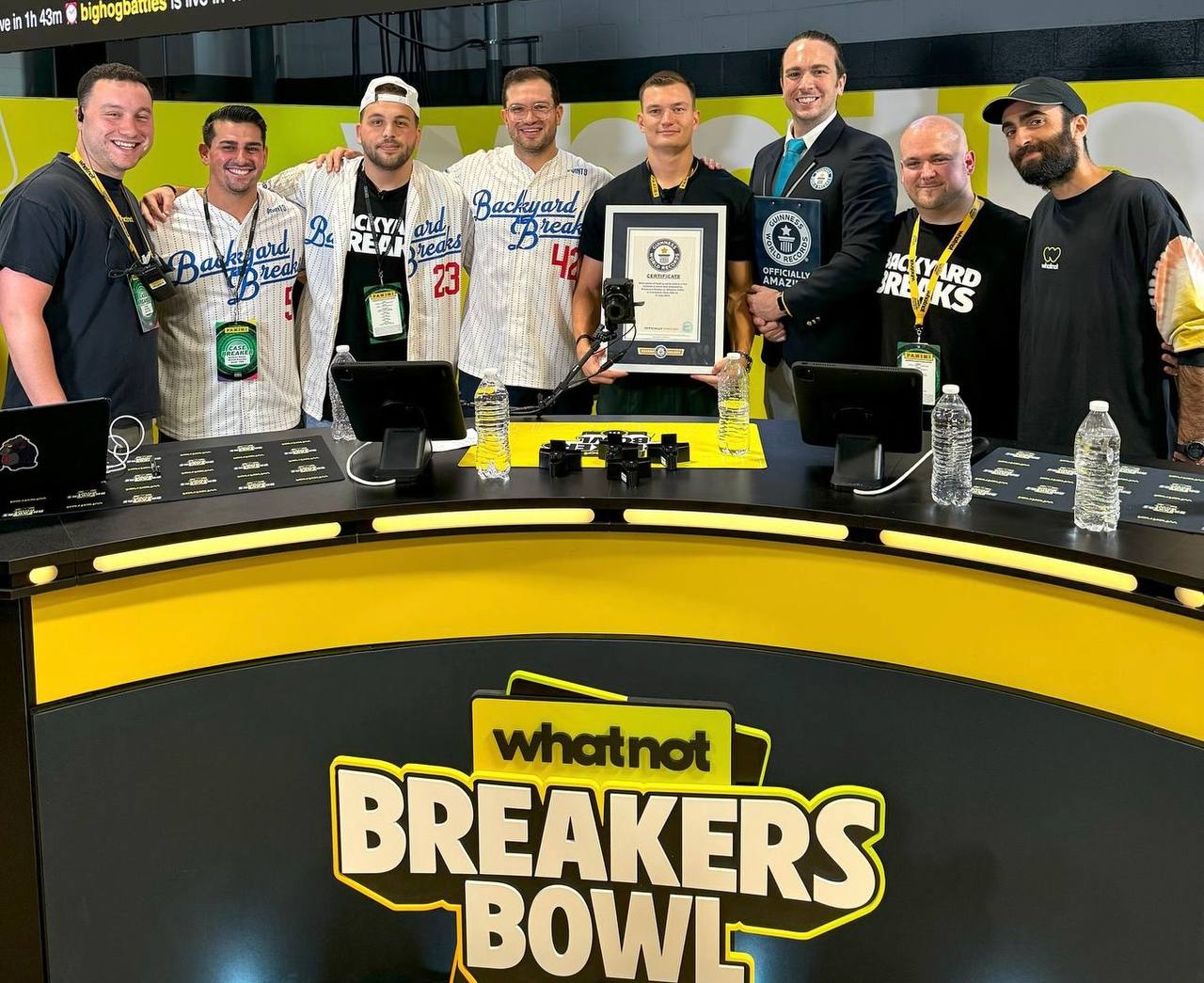
The hobby’s biggest players aren’t just using these platforms. They own them. And that raises questions about who benefits when legal scrutiny falls on one platform instead of another.
But the law doesn’t care about market cap. If randomized breaks and repacks constitute illegal gambling in California, that applies equally to every platform hosting them — not just the one getting sued.
Whatnot’s terms of service require arbitration, meaning these cases won’t play out in public courtrooms unless customers opted out within 30 days of signing up. Most didn’t. The arbitration process will be private, quiet, and likely settled with NDAs.
The hobby will keep breaking. Whatnot will keep hosting. Fanatics Live will keep spinning wheels. And unless regulators or state attorneys general step in with enforcement actions, nothing structural changes.
But the question lingers: if this is gambling, why is only one platform getting called out for it?

Written by
Grayson Bryce Thompson
Grayson writes about the sports card hobby — the money, the frauds, and the stories the industry doesn't want told. He's been collecting since the junk wax era and still has the boxes to prove it.


2 Comments